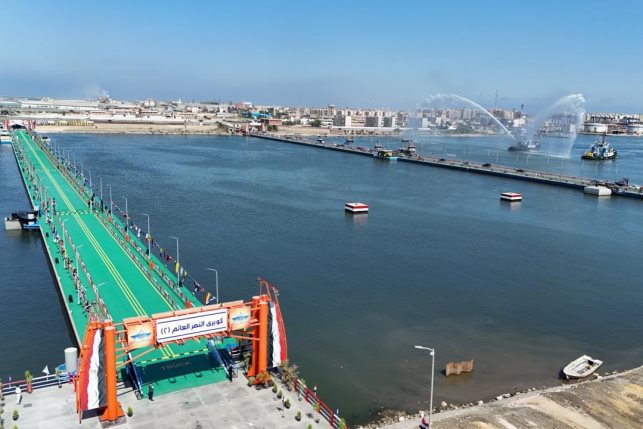
The announcement was made during the Excellence Day celebration, where the Authority also launched new maritime services and signed several memoranda of understanding with strategic partners for upcoming projects.
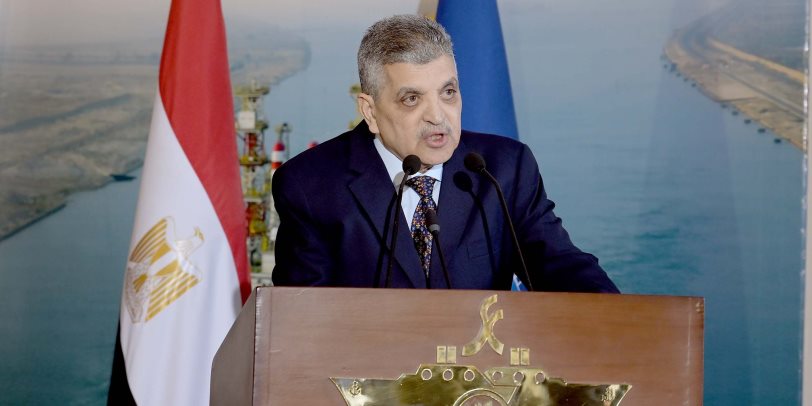
Suez Canal revenues saw a sharp decline of 61% in 2024, falling to $3.9 billion compared to $10.2 billion in 2023, according to Osama Rabie, Chairman of the Suez Canal Authority (SCA).
The announcement was made during the Excellence Day celebration, where the Authority also launched new maritime services and signed several memoranda of understanding with strategic partners for upcoming projects.
Rabie revealed that net tonnage of vessels passing through the canal dropped by 66.5% in 2024, recording 525 million tons, down from 1.68 billion tons in 2023.
Similarly, vessel traffic fell by 50%, with 13,213 ships passing through the canal, compared to 26,434 the year before.
On the operational side, Rabie highlighted a major milestone: the successful completion and activation of the Southern Sector development project, which includes both expansion and dual-lane upgrades.
The project is expected to significantly boost navigational safety, reduce the impact of water currents on transiting vessels, and increase the canal’s capacity by an additional 6 to 8 ships per day.
Despite escalating regional tensions and growing challenges, Rabie affirmed that the Suez Canal has continued to provide its vital navigation and maritime services without interruption.
He emphasized that the Authority remains committed to its ambitious strategy focused on comprehensive development—particularly the ongoing expansion of the canal’s waterway and the modernization of its maritime fleet.
These efforts are paralleled by initiatives to enhance the quality of navigational services and introduce a suite of offerings that were previously unavailable, all part of a broader vision to position the Suez Canal as a regional hub for maritime and logistics services.
He also noted that the canal’s maritime fleet has been strengthened with the addition of 23 modern marine units in recent months, aimed at maintaining the safety and efficiency of transit operations while meeting the growing demands of international trade.
Among the newly introduced services are marine rescue, emergency medical support at sea, pollution control, ship maintenance and repair, fuel supply, and crew exchange—marking a significant expansion of the Suez Canal's service portfolio.